Meridian: High‑Resolution Near‑Field Antenna Measurement
University of Wisconsin–Madison
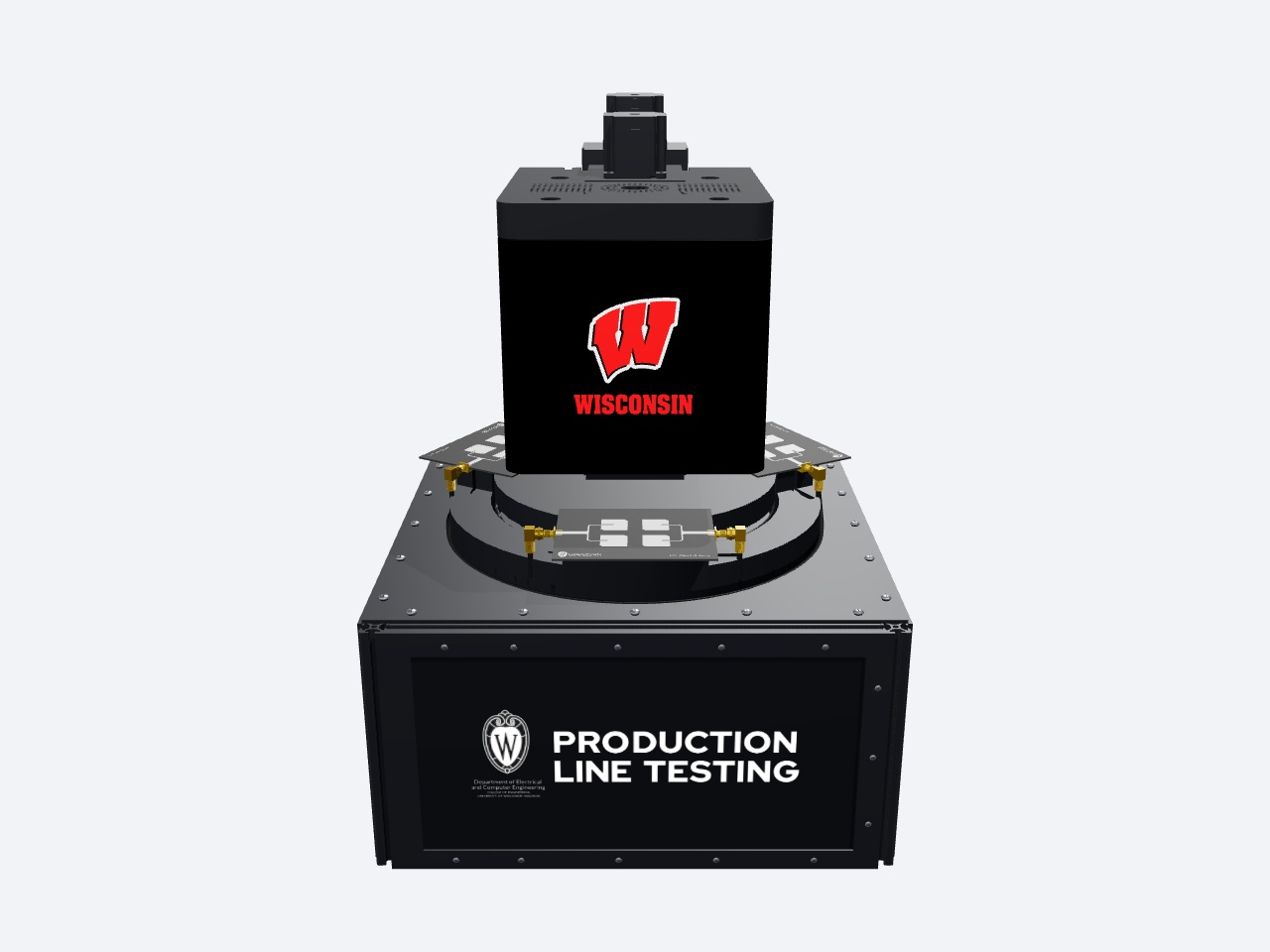
Meridian is a near‑field antenna measurement system that produces high-resolution field images in seconds. An electric field transducer converts the antenna's near field into heat, and an infrared camera records hundreds of thousands of samples from it. The resulting images resolve feed and element defects that sparse probe measurements can miss.
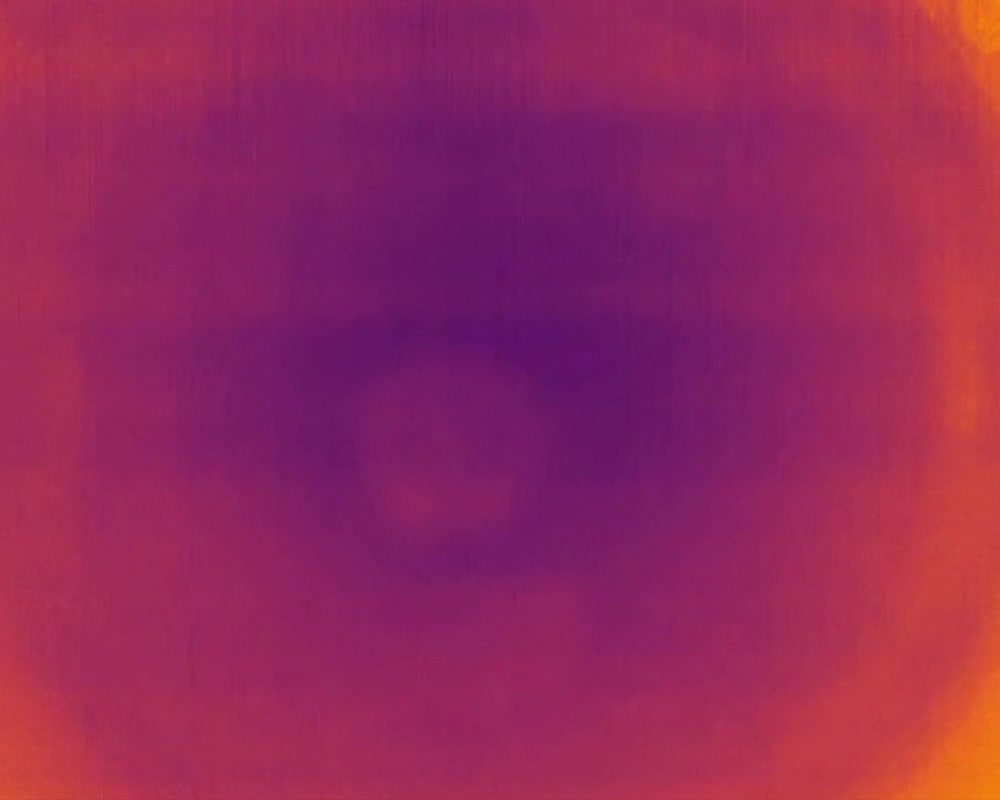
Camera view
The problem
Probe scans trade time for detail.
Conventional measurement systems move probes across a scan plane to acquire near‑field data. Larger antennas and higher frequencies mean more probe positions and longer scans, and the gaps between points leave less information for finding defects.
The method
High-resolution near‑field data in seconds.
Our thin-film electric field transducer turns the antenna's near field into heat. An infrared camera images the entire film in one frame, measuring hundreds of thousands of samples in parallel.
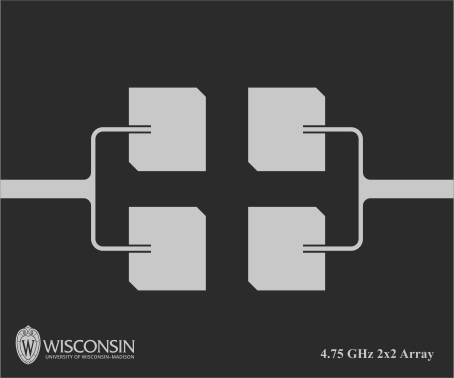
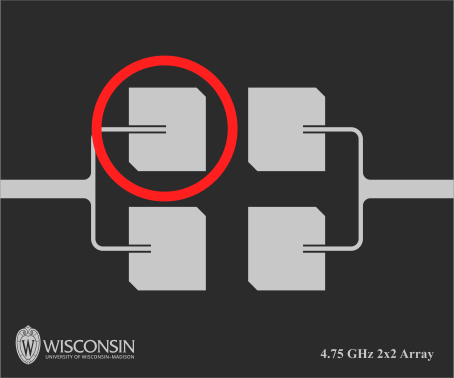
IMS 2026 prototype
Antenna diagnostics platform.
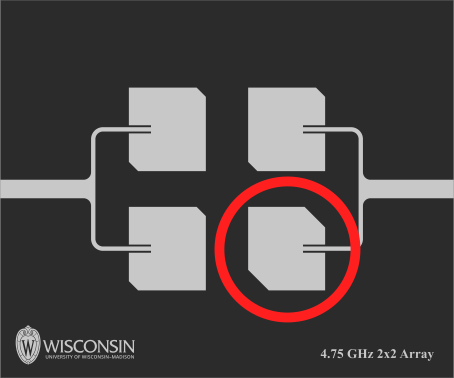
Built for the IEEE International MTT Symposia in Boston, this prototype cycles three arrays: a clean reference, a feed defect, and a patch defect through the same test sequence.
OndaMetric — Demo Game
Match each antenna to its thermal image
Antenna images
Antenna 1
|Eₓ|²
|Eᵧ|²
Drop antenna image into this column
Antenna 2
|Eₓ|²
|Eᵧ|²
Drop antenna image into this column
Antenna 3
|Eₓ|²
|Eᵧ|²
Drop antenna image into this column
Contact
Interested in faster near-field measurement?
Get in touch to discuss the prototype, measurement data, or applications for thermal antenna diagnostics.